Padel doubles tactics: how to win more points as a pair
Most padel points are won by the pair that controls the net, so good doubles tactics are about getting there, staying there and making the opponents leave it. Play through the middle, lob deep to take the net, answer lobs with controlled overheads, move together as a pair, keep the ball low at the net players' feet, and be patient: in padel, errors decide more points than winners.
Padel is a battle for the net
Watch any good match and you will see the same pattern. One pair is close to the net, volleying. The other is at the back, defending off the glass and lobbing. Points change when the defenders lob well enough to swap places, or when the attackers finish a short ball.
The net position is strong because volleys from close range give the opponents less time, and the angles favour the attacker. The back position is not hopeless, because the glass gives defenders a second chance on almost every ball. So tactics come down to one question on every shot: does this help my pair take or keep the net?
If you are new to the positions themselves, start with padel positioning: net vs back. This guide is about decisions.
Shot choice: the middle and the feet
Rule 1: when in doubt, play the middle
The middle of the court is the safest target in padel. It reduces the angles the opponents can use against you, keeps the ball away from the side walls where it can be tricky for you, and creates confusion between the two opponents about who takes it. Against most club pairs in Pakistan, a steady diet of balls through the middle produces more errors than any clever angle.
Rule 2: keep it low at the net players' feet
When the opponents are at the net and you cannot lob, keep the ball low. A ball at their feet must be volleyed upwards, which gives you time and a chance to come forward. The soft version of this is the chiquita. Hitting hard and high at net players only gives them an easy volley.
The lob battle
Rule 3: lob with a purpose, and follow it
The lob is your key to the net. A deep lob forces the net pair to turn, and the moment it clears them, you and your partner move forward together. A lob without moving forward wastes the shot. Aim deep, often over the player on the backhand side. See the full padel lob guide.
Rule 4: answer the lob without giving up the net
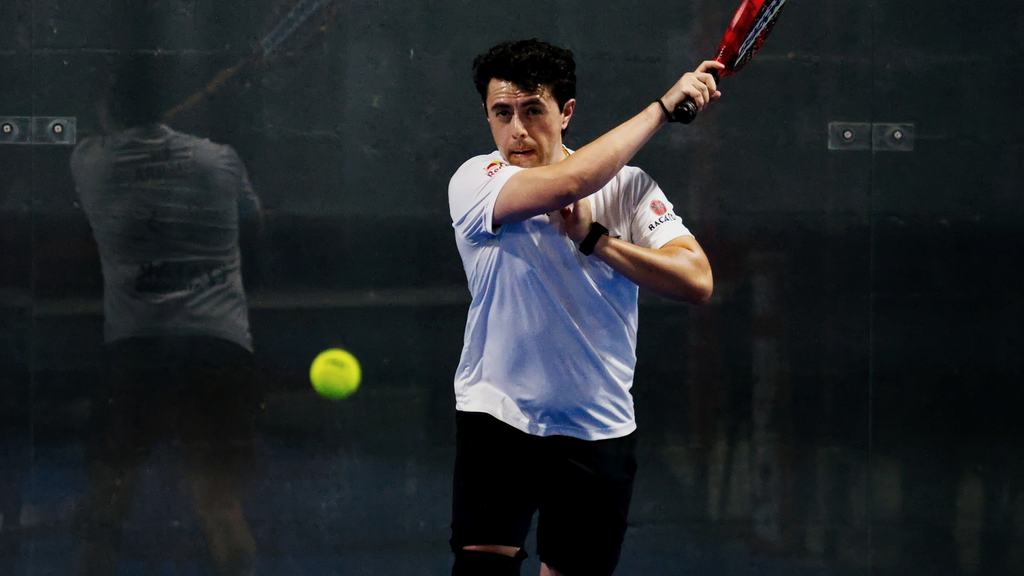
When you are at the net and get lobbed, your first choice should be an overhead that keeps you there: a bandeja on deep lobs, a vibora on medium ones, and a smash only when the lob is short. Smashing everything hard is the most common tactical mistake at club level, because the ball comes back off the glass and you lose your position.
Move as a pair
Rule 5: stay connected
Imagine a rope of about three metres between you and your partner. When one moves forward, the other moves forward. When one drops back for a lob, the other drops back too. When one is pulled wide, the other shifts towards the middle to cover the gap.
- Never split with one player at the net and one at the back for long. It leaves a hole through the middle.
- Shift together towards the side where the ball is, so the middle stays covered.
- Swap sides when needed. If a lob goes over your partner and you are better placed, take it and call it. Your partner crosses behind to cover your side.
Patience and pressure
Rule 6: be patient, the glass is on your side
Padel rewards patience more than tennis. Most points at club level end with an error, not a winner. If you are at the back, defend with the glass, lob deep and wait for a short ball. If you are at the net, keep volleying deep and to the middle until a ball sits up for you. Going for a winner from a bad position is the fastest way to lose a set.
Rule 7: find the weakness and use it
- Weaker player: in many social games one opponent is clearly less strong. Play more balls to them, especially on important points.
- Weaker side: many players struggle with backhand overheads or balls off the side glass. Lob and play into that corner.
- Tired legs: late in a long evening match in summer heat, deep lobs that make players run back hurt more.
This is not unfriendly. It is doubles. Your opponents will be doing the same to you.
Talking and roles
Rule 8: talk to your partner
Short, clear calls win points. "Mine", "yours", "switch", "bounce" and "out" are enough. Agree before the match who takes balls through the middle: a common arrangement for two right-handers is that the left-side player takes most middle balls on their forehand, but agree what suits your pair. After a lost point, one sentence of encouragement does more than a shake of the head.
Rule 9: play your role on your side
The right side (often called the drive side) and the left side (the backhand or reves side) ask different things. The right-side player is often the steadier builder of points. The left-side player, usually with the forehand in the middle of the court, often takes more overheads and finishes. These are tendencies, not laws, but knowing your role helps you decide when to attack.
A drill to train it all
Play points where the net pair can only win with a volley or overhead, and the back pair can only win after taking the net. Rotate roles every five points. It teaches the shape of padel quickly.
Put tactics into practice on PadelSP
Tactics only stick when you play real games against pairs at your standard. Find games at your Level in Play, or post your own and invite players. Use Friendly games to try new patterns, then test them in Ranked games, where your Level moves on confirmed scores and wins against stronger pairs count for more.
A verified coach on PadelSP can watch your pair and point out the habits that cost you points. To test yourselves in a proper format, enter tournaments, leagues and challenges, or try the weekly Showdown city table.
Frequently asked questions
What is the most important tactic in padel doubles?
Controlling the net. Most points are won by the pair at the net, so you want to take the net with deep lobs and keep it with controlled overheads.
Why should I play the middle in padel?
The middle reduces your opponents' angles, keeps the ball away from tricky side walls and causes confusion over who takes the ball.
Who takes the middle ball in padel?
Pairs agree this themselves. A common arrangement for two right-handers is that the player on the left takes most middle balls on their forehand.
Should both players move together in padel?
Yes. Move forward and back as a pair and shift together towards the ball, so you never leave a gap through the middle.
Keep reading