The padel bandeja: how to hit it and when to use it
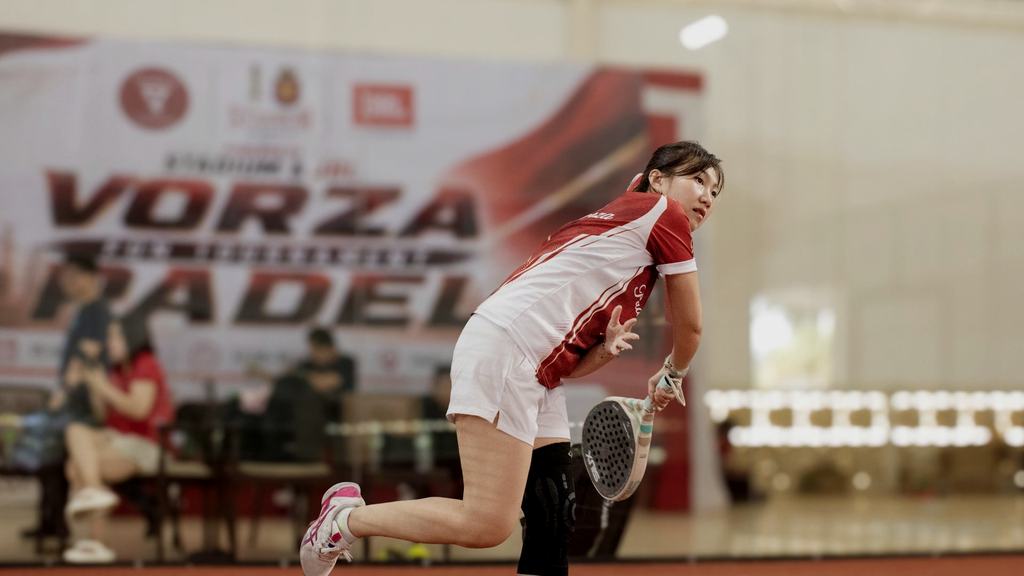
The bandeja is a controlled, sliced overhead that you play when the opponents lob you and the ball is too deep or too low to smash. Its job is not to win the point but to keep your pair at the net: you hit it with a continental grip, side-on, contact in front of you at about head height, and send it deep so it bounces low off the back glass.
What the bandeja is for
In padel, the pair at the net wins most points. The other side knows this, so their main weapon is the lob: a high ball over your head that pushes you back towards your own glass. You have three choices when a lob comes. Let it bounce and give up the net, smash it, or play a bandeja.
The bandeja is the middle option. It is a defensive overhead with slice, played at around three quarter speed, that lands deep in the opponents' court and stays low off their back glass. Because it comes back slowly and low, they cannot attack it, and you have time to step forward to your net position again. Good club players hit far more bandejas than smashes, and the best ones are boringly consistent with it.
The name comes from the Spanish for a tray, because the racket is held up and out like a waiter carrying one. If you want to understand where this shot sits among the other overheads, read our guides to the vibora and the padel smash.
When to play a bandeja
- The lob is deep and you are around or behind the service line. Smashing from there sends the ball off the back glass and straight back to the defenders.
- The ball is not high enough to get fully under it for a smash.
- You are off balance or still moving backwards when you have to hit.
- You want to keep the net rather than gamble on a winner.
A simple rule for most club players in Pakistan: if you have to move backwards more than a couple of steps to reach the lob, play a bandeja. If the lob is short and you are close to the net, you have earned the right to attack.
How to hit a bandeja, step by step
These steps are for a right-handed player. Left-handers mirror everything: turn the other way, and swap left and right.
- Grip. Use a continental grip, the same one you use for volleys, with the racket edge pointing towards the net when you hold it up. A forehand grip closes the face and turns the shot into a flat hit.
- Turn early. As soon as you see the lob, turn your shoulders and hips sideways so your left shoulder points at the net. This turn is the most important part of the shot.
- Move with side steps. Travel back with side steps or crossover steps while staying sideways. Never run backwards facing the net.
- Prepare the racket high. Lift the racket up and back with the head above your hand and your elbow around shoulder height, like the tray position. Point your left arm up at the ball to track it.
- Contact in front. Hit the ball in front of your body and slightly to your right, at roughly head height or a little above. Not behind your head.
- Cut across the ball. Swing from high to low and from right to left, with a slightly open racket face, so you brush the back and side of the ball and create slice. Keep your wrist firm rather than flicking it.
- Finish across your body. The racket ends down and across towards your left side, and your weight moves forward onto your front foot.
- Recover forward. Take two or three quick steps back towards the net. The bandeja only works if you use the time it buys you.
Where to aim
The default target is deep, landing between the opponents' service line and their back glass. A deep, low ball forces them to defend off the glass with no angle to attack you.
- Cross-court towards the side glass is the classic bandeja. The ball meets the side glass after the bounce and dies in the corner.
- Down the middle is the safest option when you are under pressure. It reduces angles and can cause hesitation between the two defenders.
- Avoid hitting it short. A short bandeja sits up in the middle of their court and they will drive it at your feet as you move forward.
Speed comes second. A slow, deep, low bandeja beats a fast one that bounces off the back glass at waist height.
Common bandeja mistakes
- Facing the net. If your chest is square to the net you have no rotation and no control. Turn sideways first.
- Contact behind the head. This usually means you were late moving back. The ball floats long or into the net.
- Trying to smash it. Hitting flat and hard from the back of the court is exactly what the opponents want: the ball rebounds off their glass into a comfortable strike zone.
- Too much wrist. A loose, flicky wrist gives inconsistent spin and puts strain on the elbow. Let the shoulder and body do the work.
- Admiring the shot. Standing still after hitting leaves you stuck at the service line, the worst place on the court.
Two drills that build a reliable bandeja
1. Lob and recover
Your partner or coach stands at the back of the other side and lobs you over and over. You start at your net position, move back with side steps, play a bandeja and recover to the net before the next lob. Count how many you land deep in a row. Start with ten, aim for twenty. This builds the movement pattern, which is half of the shot.
2. Target corners
Place a towel, cone or water bottle in the opponents' back corner on the cross-court side, about a metre from each wall. Play bandejas from fed lobs and score a point for each one that bounces inside that area. Switch to the middle target after ten balls. In practice games, try to hit every lob you cannot smash as a bandeja, even when it feels slow. Consistency comes from repetition, not from one great session.
How the bandeja fits your tactics
Padel is a battle for the net. The pair at the back lobs to take it from you, and the bandeja is how you say no. Every time you answer a lob with a deep bandeja and step back in, the opponents have to find another lob, and sooner or later one of them is short enough to finish. That is the pattern of most points between good club players.
It also works as a pair. When you play a bandeja, your partner holds the net and watches the defender's reply, ready to volley anything that comes back short. If the lob goes over both of you instead, see padel positioning: net vs back for how to switch sides.
Practise it with PadelSP
The bandeja is hard to learn from videos alone, because the problem is usually the footwork and the timing, not the swing. A coach can fix the turn and contact point in a session or two: browse verified coaches on PadelSP and ask for a session focused on overheads.
Then use it in games. Join games at your Level in Play and set yourself a target, such as playing every deep lob as a bandeja for a whole evening. Friendly games are the right place to experiment. Once it holds up, test it in Ranked games, where your Level moves on confirmed scores, and keep the live Scoreboard running so you can look back at how many points you won from the net.
Frequently asked questions
What is the difference between a bandeja and a smash in padel?
A smash is hit hard to finish the point, usually from close to the net. A bandeja is a slower, sliced overhead played from deeper in the court to keep the net and stop the opponents attacking.
What grip should I use for the bandeja?
A continental grip, the same as for volleys. It keeps the racket face slightly open so you can slice the ball and control its depth.
Where should a bandeja land?
Deep in the opponents' court, between their service line and back glass, usually cross-court towards the side glass or down the middle, so it bounces low and they cannot attack it.
What is the difference between a bandeja and a vibora?
The vibora is a more aggressive cousin of the bandeja, hit with more speed and more side spin so it stays very low off the side glass. The bandeja is the safer, more controlled shot.
Keep reading