Padel positioning: net vs back, and where to stand
In padel your pair should be in one of two places: together at the net, roughly two to three metres from it, or together at the back, a step or two in front of the back glass. The area around the service line is a transition zone you move through, not a place to stand. Move forward and back as a pair, side by side, and shift towards the ball so the middle stays covered.
The two good positions
A padel court is 20 metres long, with each half 10 metres from net to back glass. Positioning is simpler than it looks: there are two strong places to be, and one weak area in between.
- At the net: the attacking position. Both players roughly two to three metres from the net, side by side, ready to volley and to deal with lobs.
- At the back: the defending position. Both players about one to two metres in front of the back glass, ready to play the ball before or after it comes off the wall.
Everything else is transition. You pass through the middle of your half on the way forward or back, but you do not want to be caught standing there when the opponents hit.
At the net: distance, stance and lobs
The net position gives you the most control, but only if you stand at the right distance.
- Too close (touching distance of the net) and any decent lob goes over you. You also risk touching the net, which loses the point.
- Too far (back near the service line) and the opponents can drop the ball at your feet.
- About two to three metres is a good starting point for most club players. Taller players and strong overhead hitters can stand a little closer.
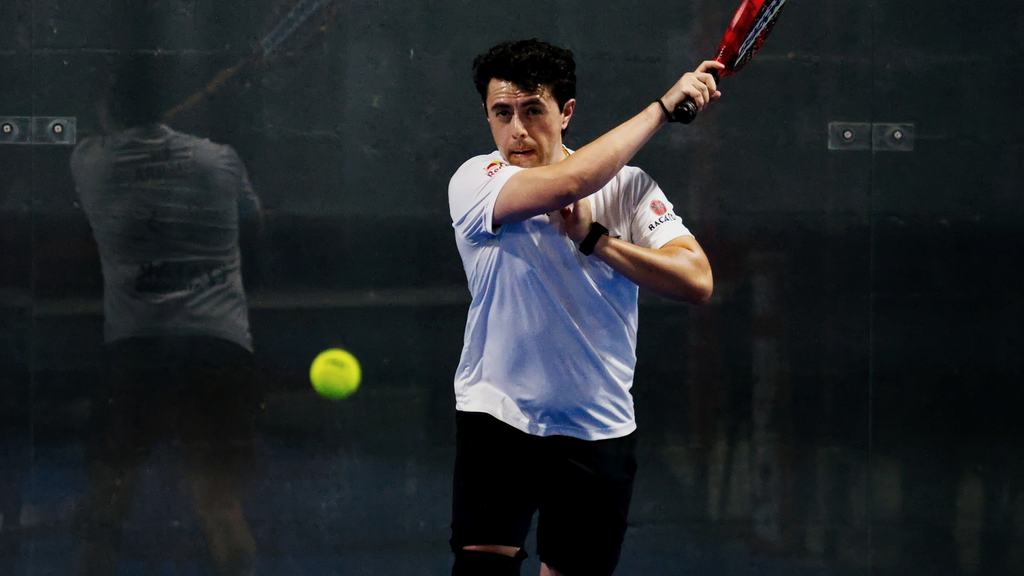
Stand with knees bent, racket up in front of your chest, ready to move in any direction. When the opponents prepare a lob, take a small step back and turn your shoulders early. When they are under pressure off the glass, step in and look to volley.
Covering lobs is part of the net job. Your answer is usually a bandeja or vibora that lets you stay forward, not a sprint back to the glass.
At the back: patience and the glass
At the back you are defending, and the glass is your friend. Stand a step or two in front of the back glass, close enough that you can let a ball come off the wall, far enough that you are not squashed against it.
- Let the ball come to you. Many balls are easier to play after they rebound off the back glass, when they have slowed down.
- Stay side by side. If your partner is pulled into a corner, move towards the middle so there is no gap.
- Look for the ball to move forward on. A deep lob or a low chiquita is your ticket back to the net.
No man's land: the service line
The worst place to stand in padel is around the service line, roughly halfway between the net and the back glass. From there, balls arrive at your feet, too low to attack and too fast to let bounce and play off the glass. Club players lose a huge number of points in this zone without realising why.
You will pass through it every time you move forward after a lob or drop back for an overhead. That is fine. The mistake is stopping there to watch your shot. After you hit, keep moving to the net or back, as a pair.
Moving as a pair
Good positioning is a team skill. Think of your partner and you as linked by a rope a few metres long.
- Forward together. When your pair lobs deep, both move up to the net while the ball is in the air.
- Back together. When a lob goes over your pair, both drop back. One player chases the ball, the other moves to cover.
- Shift sideways together. If the ball goes to your partner's side glass, you move towards the middle, not stay on your own line.
- Switch sides when needed. If a lob goes over your partner and you are better placed, take it and call "switch" or "mine". Your partner crosses to your side to cover.
For the decisions that go with these movements, read padel doubles tactics.
Positions at the serve and return
- Server: behind the service line, between the centre line and the side wall, then straight to the net after serving.
- Server's partner: already at the net on the other side, about two to three metres from it, covering the line and watching for a weak return to volley.
- Receiver: a step or so in front of the back glass, diagonal to the server.
- Receiver's partner: around the service line on their own side, ready to read the return and move forward or back with the receiver.
More on serving and returning in our serve and return guide.
Common positioning mistakes and two drills
- Splitting: one player at the net and one at the back for several shots. The ball goes through the gap between you.
- Hugging the back glass, leaving no room to play the ball after it rebounds.
- Standing too close at the net, which makes you easy to lob.
- Ball-watching after your own shot instead of moving to the right place.
Drill 1: shadow movement
Without a ball, a coach or friend calls "lob", "net", "left" or "right". Your pair moves together to the right position each time. Two minutes of this before a session builds the habit.
Drill 2: freeze
During a practice game, someone calls "freeze" at random. Everyone stops. Check where each player is standing. Anyone in no man's land, or split from their partner, explains why.
Practise positioning with PadelSP
Positioning is hard to see from inside the court, which is why a coach helps so much. A verified coach on PadelSP can watch your pair from outside and fix your spacing in one session. Filming a few points also helps: short match videos, like the Rallies players share on PadelSP, show exactly where you stood when you lost a point.
Then play regularly with players at your Level. Find or post games in Play, and keep the live Scoreboard on your phone so you know the score and can focus on moving. Once your positioning is solid, Ranked games and competitions will show it in your results.
Frequently asked questions
Where should I stand at the net in padel?
About two to three metres from the net, side by side with your partner. Closer and you are easy to lob, further back and the ball lands at your feet.
Where should I stand at the back in padel?
About one to two metres in front of the back glass, so you can let the ball rebound off the wall and still have space to swing.
Why is the service line called no man's land?
Because balls arrive at your feet there, too low to attack and too fast to let bounce off the glass. Pass through it, but do not stop there.
Should padel partners move together?
Yes. Move forward, back and sideways as a pair, so there is never a big gap through the middle of your court.
Keep reading