Best padel rackets for advanced players: matching the racket to your game
Advanced padel players usually choose between a diamond racket with a high balance, hard EVA core and stiff carbon face for maximum power, and a teardrop with an even balance and firm core for control with punch. The right choice depends on your side of the court and how you win points, not on which racket the pros use. Test any racket for at least a few full sessions before committing.
What changes at advanced level
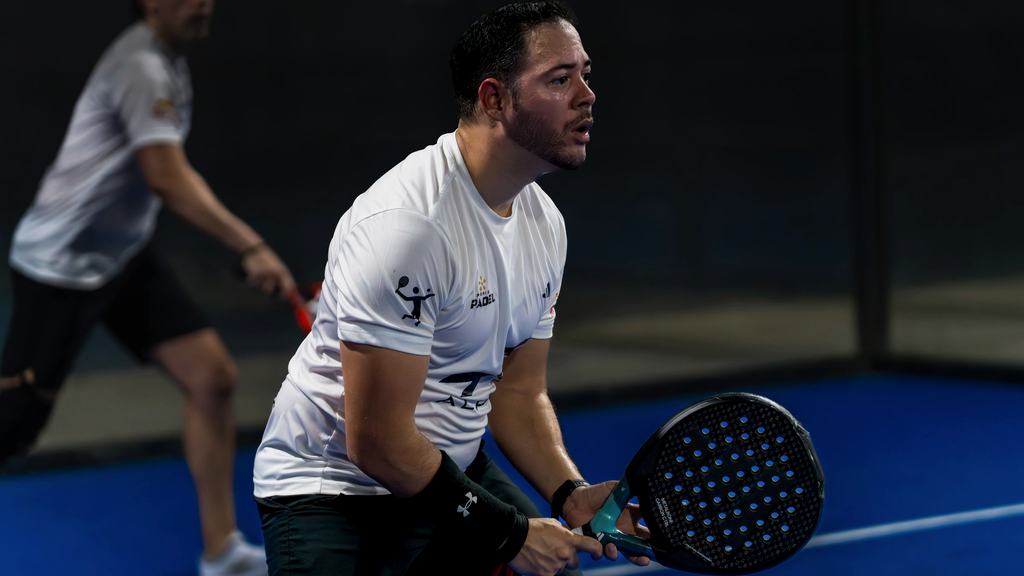
At the top of club padel, your racket stops being about forgiveness and starts being about precision. You hit the sweet spot most of the time, your swing speed is high, and points are decided by depth, spin and the quality of your overhead. A racket that helped you as an improver can now feel soft and imprecise, with the ball staying on the face too long.
Advanced players also have more defined roles. In most pairs one player covers the left side (usually the finisher, since a right-hander there has the forehand towards the middle for overheads) and the other plays the right, building points and defending. Those roles call for different rackets, and a good pair often uses two quite different frames.
If your PadelSP Level sits in the upper part of the 0 to 7 scale and you win Ranked games against strong opponents, this guide is for you. If not, the intermediate guide will serve you better.
Diamond vs teardrop at the top level
| Profile | Shape and balance | Core and face | Best for |
|---|---|---|---|
| Power | Diamond, high (head-heavy) balance | Hard EVA, stiff carbon | Left-side finishers with a strong, well-timed smash |
| Hybrid | Teardrop or rounded diamond, medium to high balance | Medium to hard EVA, carbon | Players who attack and defend in equal measure |
| Control | Teardrop or round, even balance | Medium EVA, carbon or carbon mix | Right-side builders, lob specialists, players who live at the net with soft hands |
A diamond puts the sweet spot high on the face and concentrates mass towards the tip. On a full overhead that mass adds a lot of pace and lets you hit the ball out of the court (the "x3" or "x4" finishes you see at clubs). The cost is a smaller sweet spot, slower hands in fast volley exchanges and more load on your arm. Read our shapes guide for the detail.
Hard EVA, stiff carbon and texture
Most advanced rackets use a hard or high-density EVA core. Hard EVA returns energy only when you supply it: hit hard and the ball flies, hit soft and it stays where you put it. That is exactly what a skilled player wants, and exactly why it punishes beginners.
Faces move towards full carbon, often in weaves labelled 3K, 12K or 18K. The number counts thousands of filaments per woven bundle, and brands use different weaves and layer counts to tune stiffness and feel. Treat the label as a clue, not a verdict, and judge the racket in your hand. Some advanced rackets add reinforcements such as extra carbon layers in the frame or throat, aimed at stability on off-centre hits.
Surface texture matters at this level. A rough, sandy or 3D finish grips the ball and helps you put heavy slice on the bandeja and kick on the vibora. Texture wears down with play, which is one reason serious players replace rackets more often than they expect.
See our materials guide for a full comparison of cores and faces.
Advanced rackets to try (by name)
These are the power rackets you see in tournaments. They reward clean technique and punish late, off-centre hits, so only move here once your Level and your arm are ready.
| Racket | Shape | Why it suits |
|---|---|---|
| Bullpadel Hack (03, 04) | Diamond | Bullpadel's power racket: heavy head, built for smashes and finishing at the net. |
| Bullpadel Vertex (04, 05) | Diamond | Attacking racket with a little more feel than the Hack. |
| Babolat Technical Viper | Diamond | A stiff, head-heavy attacking frame used at the top of the game. |
| Head Coello Pro | Diamond | High balance and power, from Head's line built around Arturo Coello. |
| Adidas Metalbone | Diamond | Adidas' power racket, popular with attacking right-side players. |
Model names change every season (2025, 2026 and so on), and specs and prices move with them, so check the current version with the store. Stores on PadelSP and padel shops in Lahore and Karachi stock several of these brands; try before you buy where a club or coach has a demo racket.
Weight, balance and customising
Advanced players often play at the heavier end of the general adult range, roughly 340 to 385 g, because extra mass adds stability and depth. Other strong players prefer a slightly lighter, faster racket with a high balance, which keeps the punch on overheads without slowing the hands. There is no single right answer: it depends on your physical strength, your timing and how many hours a week you play.
You can fine-tune any racket:
- Frame protector: adds a few grams to the top of the frame and shifts the balance slightly towards the head.
- Overgrips: each extra layer adds weight in the handle, making the racket feel more head-light, and thickens the grip.
- Weight tape: some players add small strips of lead tape to the frame. Do it a little at a time, and stop if your arm complains.
Read padel racket weight and balance for how balance changes the feel of a racket more than weight alone.
Look after your arm
Advanced players are the most likely to get padel elbow, simply because they play the most and use the hardest rackets. A diamond racket with hard EVA, played five nights a week through a hot Pakistani summer, is a lot of load on a forearm. Warning signs include pain on the outside of the elbow when you grip, pour or lift.
If that starts, do not push through it. Drop to an even balance and a softer core for a while, use fresh overgrips so you can hold the racket loosely, and get your technique checked by a coach on PadelSP Coaches. A lot of elbow pain at this level comes from muscling volleys rather than using the legs and body.
Testing and buying an advanced racket
One evening with a demo racket is not enough at this level. Try a racket over two or three full sessions, including a competitive game, before you decide. Many advanced players borrow from partners in their regular group or buy a used version of a racket first, then buy new if it clicks.
Bullpadel, Babolat, Head, Adidas, Nox, Siux and Wilson all make pro-level power, hybrid and control rackets, usually updated each season. Compare stock and current prices at stores on PadelSP, and use the Market to buy and sell: advanced players tend to rotate rackets often, so lightly used high-end frames turn up regularly. Inspect carefully for frame cracks, worn texture and soft spots on the face, and ask how many hours it has been played.
Put it to work in competition
The best test of a racket is competitive padel. PadelSP runs tournaments, leagues and challenges under Competitions, plus a weekly Showdown city table with monthly prizes. Play Ranked games in Play and watch your Level over the following weeks: it moves only on confirmed scores, so it is an honest read on whether the new racket is helping.
If you are building a strong group around you, the referral ladder pays off in gear: 50 friends who join and play a confirmed game earns you a Babolat Air Vertuo racket.
Frequently asked questions
What racket do advanced padel players use?
Most advanced players use either a diamond racket with a high balance and hard EVA core for power, or a teardrop with an even balance and firm core for control. The choice depends on your side of the court and how you win points.
Is a diamond racket only for advanced players?
Mostly, yes. Diamonds have a smaller, higher sweet spot and a head-heavy feel that rewards clean, fast swings. Improving players usually get more from a teardrop until their overhead is consistent.
Why does my racket feel dead after a few months?
Heavy play compresses the core and wears the surface texture, and heat speeds this up. Advanced players who play most days often replace or rotate rackets more often than casual players.
Do left and right side players need different rackets?
Often. Left-side players who finish points usually prefer more power and a higher balance, while right-side players who build and defend often prefer control and an even balance.
Keep reading