Padel court construction in Pakistan: what goes into a court
A padel court is a 20 by 10 metre enclosed court built from a level concrete or asphalt base, a steel frame holding glass back walls and mesh side panels, artificial turf filled with sand, and lighting for night play. In Pakistan the biggest choices are indoor, covered or outdoor, how the court faces the sun, and how it drains in the monsoon, so get detailed quotes from several builders for your exact site.
The court itself: size and layout
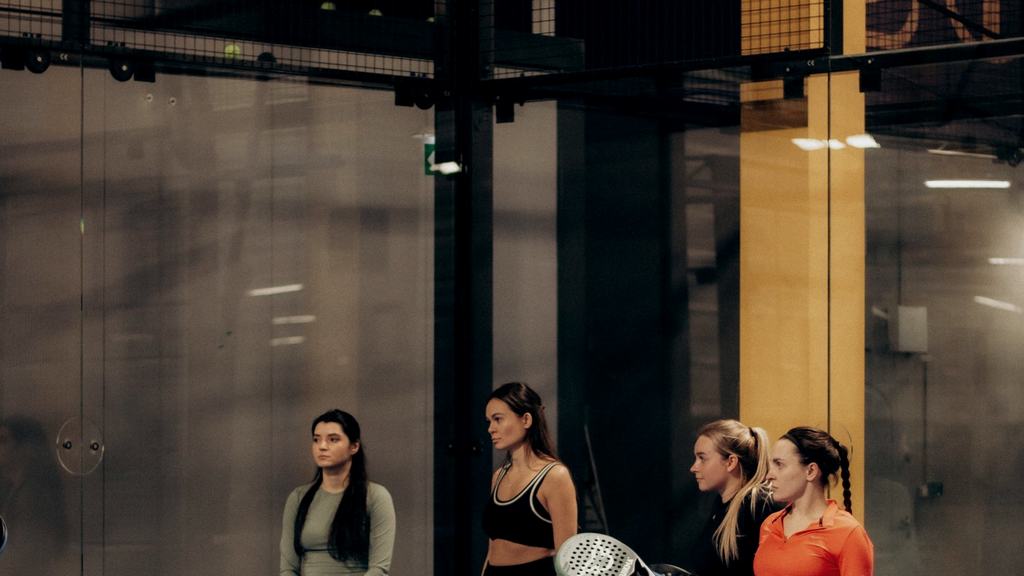
A doubles padel court measures 20 metres long by 10 metres wide, split by a net in the middle, with walls at both ends and partly along the sides. Players can play the ball off the walls, which is what makes padel padel. Around the court you need extra space for access doors, a walkway, and somewhere for players to wait.
Height matters too. Lobs are a big part of the game, so an indoor or covered court needs a high, clear ceiling with no beams or lights hanging into the play space. Ask builders what clear height they design for, and check that your building or roof can give it.
If you are still deciding whether to build at all, read how to open a padel club in Pakistan first.
Base and foundation
Everything sits on the base. A padel court needs a flat, level slab, usually concrete or asphalt, with a very slight fall so water runs off. If the slab is uneven, the turf will ripple, balls will bounce unpredictably and water will pool.
- Ask for a soil check on new ground, especially on filled plots in new housing societies.
- The posts of the steel frame need proper anchoring. Glass panels are heavy and the structure must stay rigid for years.
- Leave room for drainage channels around the edges (see below).
Glass, mesh and the steel frame
The walls are where most of the visual quality, and much of the playing quality, comes from.
- Glass panels. The back walls and the first section of the side walls are tempered safety glass. Panels must be thick enough and properly fixed so the ball rebounds evenly and the glass survives hard hits and players running into it. Ask builders what glass thickness and fixing system they use.
- Mesh. The rest of the enclosure is welded steel mesh. It must be tight and flat; loose mesh gives dead or wild bounces.
- Steel frame. Galvanised and painted steel resists rust. In coastal cities like Karachi, humidity and salt air make corrosion protection especially important.
- Doors. Courts have entry openings on the sides; make sure they are placed where players actually walk in.
Some builders supply panoramic courts with fewer posts behind the glass, which gives spectators a clearer view. It is worth asking about if you plan to host events.
Artificial turf and sand
Padel courts use artificial grass filled with sand. The turf type and the sand fill affect speed, grip and how much the ball skids.
- Turf. Builders offer different fibre types and pile heights. Ask which one suits heavy use and heat, and how it behaves in summer.
- Sand. The sand fill keeps fibres upright and gives players grip. Too little sand makes the court slippery; too much makes it heavy and slow.
- Colour. Blue, green and terracotta are common. Pick one that gives good contrast with a yellow ball under your lights.
- Upkeep. Turf needs regular brushing and sand top-ups, and outdoor courts collect dust. Ask the builder for a maintenance plan and what the turf warranty covers.
Indoor, covered or outdoor in Pakistan's climate
Climate is the decision that shapes your whole project:
- Outdoor. The simplest build, but summer daytime heat, monsoon rain and dust storms all cut playing hours.
- Covered. A roof with open sides keeps off sun and rain and stretches playable hours, without the full cost of a building.
- Indoor. Playable at any hour and in any season, and the courts that fill first in the hot months. You need a building with enough clear height, ventilation or cooling, and lighting throughout.
For outdoor courts, orientation matters. Builders usually line the long side of the court roughly north to south so the low morning and evening sun is not straight in players' eyes. Check your plot's shape against this before you fix the layout.
Lighting for night play
Most padel in Pakistan is played after dark, so lighting is not an extra. Good court lighting is even across the whole court, bright enough to track a fast ball, and placed so it does not shine into players' eyes on lobs or smashes. LED floodlights mounted on the frame or the roof are common.
- Ask builders how many fittings they use per court and how they avoid glare and dark corners.
- Plan the electrical load and a backup supply. Load shedding in the middle of a Friday social night ends it.
- Check your housing society or area rules on outdoor lights and late play, since bright lights and noise can bother neighbours.
Drainage, permits and the build process
Drainage. Monsoon downpours can flood a court in minutes. Outdoor and covered courts need a base with a gentle fall, drainage channels along the edges and a place for the water to go. Indoor courts need roof drainage that does not leak onto the turf.
Permits and approvals. Confirm what your local development authority, cantonment board or housing society requires before work starts: building approval for a roofed structure, commercial use of the land, lighting and noise rules, parking. Requirements differ by city and by society, so ask the authority directly.
Getting quotes. Ask several builders for itemised quotes covering the base, frame, glass, mesh, turf and sand, lighting, any roof or building work, drainage, delivery and installation, and warranty. Ask to see courts they have already built and to speak to the owners. Costs depend heavily on land, steel, imported glass and turf, exchange rates and finish, so only a quote for your exact site is useful.
After the build: fill the court
A beautiful court with empty slots is still a cost. Plan your launch before the last panel goes in: a free club page on PadelSP, a weekly social night, coaching and a first tournament. List your club at PadelSP for clubs, where players find clubs, post games at their Level and follow clubs for news, and you can run Americano nights, tournaments and leagues on the live Scoreboard with TV mode for your club screen. Then read how to fill empty court slots.
Frequently asked questions
What size is a padel court?
A doubles padel court is 20 metres long and 10 metres wide, enclosed by glass and mesh walls, with extra space around it for access and seating.
How much does it cost to build a padel court in Pakistan?
It depends on land, indoor or outdoor, glass and turf quality, lighting, roofing and finish. Get itemised quotes from several builders for your exact site.
Which way should an outdoor padel court face?
Builders usually line the long side roughly north to south so the rising and setting sun is not in players' eyes. Confirm the best layout for your plot with your builder.
Do I need permission to build a padel court?
Usually yes, especially for roofed structures, commercial use, lighting and late play. Check with your development authority, cantonment board or housing society before construction starts.
Keep reading