Best padel rackets for beginners: how to choose your first racket
The best padel racket for a beginner is a round racket with a low (head-light) balance, a soft EVA or foam core and a fibreglass or mixed face, at the lighter end of the adult range. That combination gives you a big sweet spot, easy power on slow swings and less strain on your elbow. Try two or three at a club before buying, and skip expensive pro rackets until your game needs them.
What a beginner actually needs from a racket
In your first months of padel, almost every point is decided by errors: balls hit off the frame, volleys into the net, lobs that land out. You are not losing because your racket lacks power. You are losing because the ball is not meeting the middle of the face often enough. So the job of a beginner racket is simple: make your mishits less bad.
Three things do that. A large sweet spot, so off-centre hits still go over. A soft, lively feel, so the ball comes off the face without a big swing. And low weight in the head, so the racket is quick to get into position at the net and kind to your arm. A good pro shop coach will steer every new player towards the same family of rackets for exactly these reasons.
What a beginner does not need: a diamond shape, a hard carbon face or a racket marketed to a world tour player. Those rackets reward fast, clean swings and punish everything else.
The beginner checklist: shape, balance, weight, core, face
| Feature | Choose | Why |
|---|---|---|
| Shape | Round | The sweet spot sits low and central, close to your hand, so it is easiest to find. |
| Balance | Low (head-light) or even | Quicker hands at the net, less load on the elbow and shoulder. |
| Weight | The lighter end of the adult range | Most adult rackets sit roughly between 340 and 385 g. Beginners usually do better in the lower half. |
| Core | Soft EVA or foam | Gives the ball more speed on slow, short swings and absorbs vibration. |
| Face | Fibreglass or fibreglass and carbon mix | More flexible and forgiving than full carbon, and usually cheaper. |
| Surface | Smooth or lightly textured | Spin comes later. A rough face is a bonus, not a need. |
If a racket ticks the first four rows, it is a sensible first racket. The rest is about feel and budget. For a deeper look at each factor, read our guides to racket shapes and weight and balance.
Why round rackets suit new players
Padel rackets come in three broad shapes: round, teardrop and diamond. A round head puts the sweet spot near the centre of the face and keeps most of the mass near your hand. When you are still learning where the ball will be, that is the most forgiving shape you can hold.
Round rackets also suit the shots beginners play most: blocking volleys at the net, chipping returns and lifting the ball out of the back corners. Power comes later with technique, and you can always move to a teardrop when you start to hit overheads with intent.
The one exception: if you come from tennis or squash and already swing cleanly, a teardrop with a medium balance may feel more natural from day one. Even then, keep the core soft and the weight moderate while you learn the walls.
Beginner rackets to try (by name)
These are long-running beginner lines from the big brands. All are round with a forgiving feel, which is what you want while you learn. Pick by weight and grip in your hand, not by the name on the frame.
| Racket | Shape | Why it suits |
|---|---|---|
| Bullpadel Indiga | Round | Soft, forgiving and built for learning. A common first racket in Bullpadel's range. |
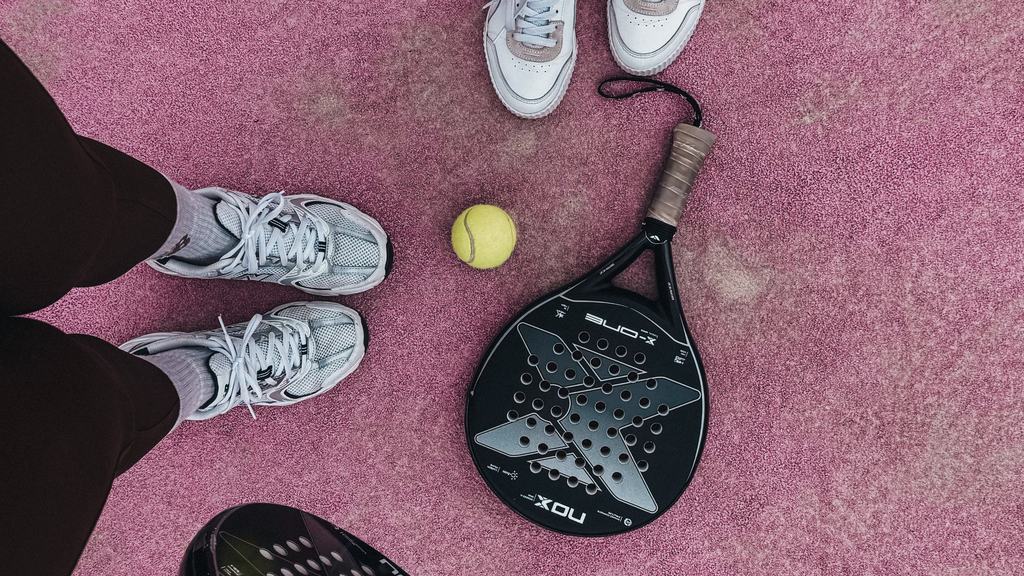
| NOX X-One | Round | Large sweet spot and a soft feel, so off-centre hits still go over. |
| Adidas RX series | Round | Adidas' entry line: light, easy to swing and kind on the arm. |
| Babolat Contact | Round | Babolat's beginner model, aimed at comfort and control. |
Model names change every season (2025, 2026 and so on), and specs and prices move with them, so check the current version with the store. Stores on PadelSP and padel shops in Lahore and Karachi stock several of these brands; try before you buy where a club or coach has a demo racket.
Protecting your elbow from day one
Padel elbow is real, and it usually shows up in players who started with a racket that was too heavy, too head-heavy or too stiff, then played five nights a week. A beginner's forearm is not yet used to the repeated short impacts of volleys, and Pakistani players often go from zero to daily games very quickly once they find a group.
- Keep the head light. A heavy head acts like a lever on your elbow.
- Keep the core soft. Soft EVA and foam soak up vibration that a hard core sends up your arm.
- Look for anti-vibration features. Many brands build dampening systems into the throat or core. They help, but they do not replace good technique.
- Use a fresh overgrip. A worn, slippery grip makes you squeeze harder, which strains the forearm. See our overgrips guide.
- Fix the swing. A short lesson with a coach on how to hold the racket loosely does more for your elbow than any gadget.
Brands and buying in Pakistan
Every major maker has a beginner or "control" line: Bullpadel, Babolat, Head, Adidas, Nox, Siux and Wilson all make round, soft, forgiving rackets aimed at new players. Rather than chasing a particular model, use the checklist above and read the product description for the words round, control, soft, comfort and fibreglass. Avoid rackets described mainly as power, hard, diamond or high balance.
Prices change with stock and import costs, so we do not list them here. Browse stores on PadelSP to compare what is in stock in your city, and check the Market there for good second-hand rackets. A used control racket from a player who has moved up a level is often the best value first racket you will find. Before you pay, check the frame for cracks, look for dents on the edge, shake it to hear any loose material inside, and ask how many months it has been played.
Some clubs keep demo or rental rackets. Use them. Play a full session with a round racket and a teardrop racket and notice which one feels easier at the net. If you can, ask a coach on PadelSP Coaches to watch you hit with two options for ten minutes. You will learn more than from any review.
Common first-racket mistakes
- Buying what the best player at the club uses. Their racket suits their swing speed, not yours.
- Buying on looks or price alone. An expensive carbon diamond racket will make you play worse for the first year.
- Going too heavy. A racket that feels solid in the shop feels like a brick at the end of a 90 minute evening game.
- Leaving it in a hot car. Summer heat in Lahore, Karachi or Multan is hard on the foam and resin inside a racket. Carry it in a bag and keep it out of the boot in the afternoon sun.
- Skipping a protector. Beginners scrape the frame on the floor and walls a lot. A clear frame protector is cheap insurance.
When to upgrade, and how PadelSP helps
Most players keep their first racket for six months to a year. You will know it is time to move on when you start winning points with your overhead, when you want more bite on your bandeja, or when the racket starts to feel dead after a lot of play. That is when an intermediate racket starts to make sense.
Your PadelSP Level is a useful guide here. It moves only on confirmed scores against real opponents, so as it climbs you have honest evidence that your game has grown. Find games at your Level in Play, keep your first racket until you plateau, then upgrade with a purpose.
There is also a way to earn a racket rather than buy one: invite friends to PadelSP. When 50 friends join with your link and each plays a confirmed game, you earn a Babolat Air Vertuo racket, with gear like overgrips, a cap, a t-shirt and a bag at the earlier steps.
Frequently asked questions
What weight padel racket should a beginner buy?
Most adult padel rackets weigh roughly 340 to 385 g, and beginners usually feel best in the lighter half of that range with a head-light balance. Lighter rackets are quicker at the net and easier on the elbow.
Is a round or teardrop racket better for beginners?
Round is the safest choice for most beginners because its sweet spot is large and close to the hand. Players with a tennis or squash background who already swing cleanly can try a teardrop with a medium balance.
Should a beginner buy a carbon padel racket?
Not usually. Full carbon faces are stiffer and reward fast, clean swings. A fibreglass or mixed face is more forgiving, more comfortable and usually cheaper, which suits the first year of play.
Where can I buy a padel racket in Pakistan?
Padel stores in the bigger cities and many clubs sell rackets, and you can compare stock and prices from stores on PadelSP, or buy second-hand from other players on the PadelSP Market.
Can I try a racket before buying?
Yes. Some clubs have demo or rental rackets, and friends will usually lend you theirs for a few games. Trying a round and a teardrop racket back to back is the quickest way to find what suits you.
Keep reading